
OFFSHORING2PH INSIGHTS
A Practical Plan For Onboarding An Offshore Team Member
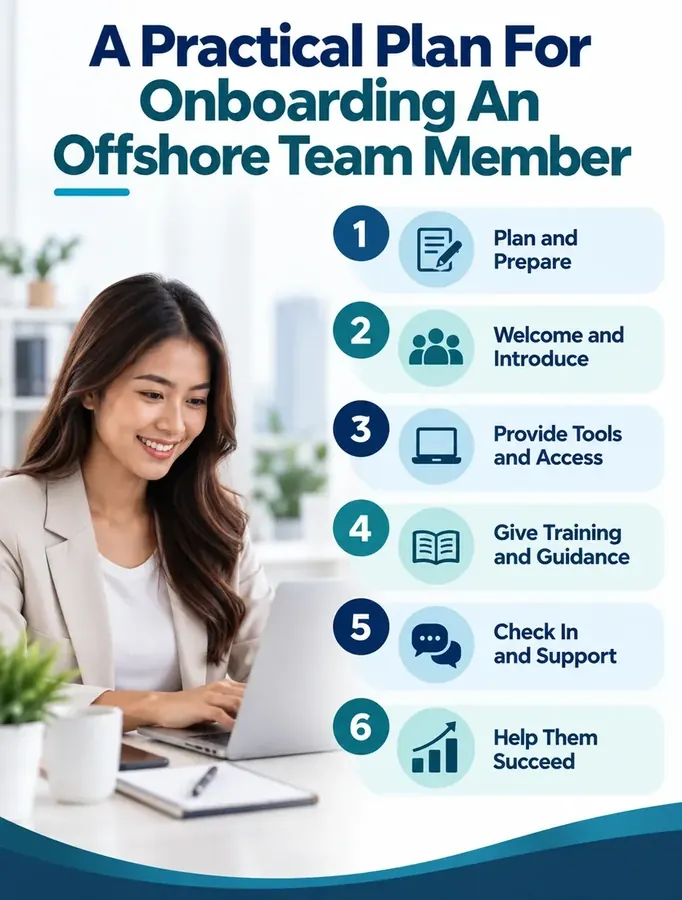
Hiring the right person is only the beginning. The first weeks of onboarding determine whether a new offshore team member becomes dependable capacity or another responsibility added to a busy manager's day. A practical onboarding plan gives the person context, clear priorities, and a reliable way to ask questions. It also helps the business improve the processes that will support growth long after the first role is established.
Start With A Defined First Role
A new team member should not have to guess where to begin. Before the start date, describe the purpose of the role, the first responsibilities, the expected schedule, and the outcomes that matter most. A virtual assistant may begin with inbox management and data updates. A customer-service professional may begin with a defined set of common requests. An accounting support role may start by preparing information for review. A focused first scope makes it easier to learn the business without becoming overwhelmed.
Avoid loading every possible task into the first week. Choose work that occurs regularly, has a clear result, and can be checked by an internal owner. Once the process is dependable, related responsibilities can be added gradually. This creates momentum and gives both the manager and the new team member a realistic view of what good performance looks like.
Share The Context Behind The Tasks
Instructions are more useful when they explain why the work matters. A customer-service team member should understand the tone the business wants customers to experience. An administrative support professional should know which deadlines affect customers or internal decisions. An accounting team member should understand why supporting documents need to be complete before review. Context helps people make better choices when a situation does not fit the exact example in the guide.
Create a short introduction to the business that covers its services, customers, key terms, and the people or teams the role will work with. Include the communication style you want to maintain. This does not need to be a lengthy presentation. A simple overview, paired with examples of good work, gives a new person a stronger foundation than task instructions alone.
Turn Routine Work Into Clear Workflows
The best onboarding materials are practical. Use a step-by-step checklist for recurring work, include screenshots or a short recording when a process is easier to show, and keep templates in one easy-to-find location. Each workflow should identify the trigger, the steps, the expected output, and the point where the work needs review or escalation.
Build these resources around the real way your team works, not an idealized version of it. If a process has frequent exceptions, document the common ones and note who can help with the rest. As questions arise, add the answer to the workflow. Over time, these updates reduce repeated explanations and make it easier to expand the team without rebuilding the onboarding process from scratch.
Set A Consistent Communication Rhythm
In the first week, short daily check-ins can prevent small misunderstandings from becoming larger delays. Use the time to confirm priorities, review completed work, answer questions, and identify anything that needs a clearer example. Once the role is established, a weekly review may be enough for most routine work.
Choose communication channels deliberately. A task-management tool or shared tracker can show what is in progress, while a team chat can handle quick questions. Keep important decisions and process updates where they can be found later. This helps the new team member work independently while giving the manager visibility into the work without relying on constant messages.
Make Escalation Easy And Safe
A strong team member knows when to proceed and when to ask. Define which decisions they can make within the role and which issues need approval. For customer support, this might include the difference between a routine question and a complaint that needs management attention. For administration, it may include requests involving confidential information or changes to a leader's schedule. For accounting support, it should clearly separate preparation work from final approval.
Provide an escalation path with the right contact, the preferred communication method, and the information to include. Ask team members to share the relevant details, the action already taken, and the deadline or customer impact. Clear escalation protects quality, shortens response time, and gives people confidence that asking for help is part of doing the work well.
Review The First 30 Days
The first month is a chance to refine the role, not only evaluate the person. Review the work that is now running smoothly, the steps that still create confusion, and the tasks that might be ready to add next. Look at accuracy, turnaround time, communication, and the effect on the internal team's workload. These measures are more useful than simply counting activity.
A brief 30-day discussion can also uncover process improvements that benefit the whole business. The new team member may notice duplicate steps, missing templates, or requests that arrive without the information needed to complete them. Treat those observations as useful input. A good onboarding process creates a feedback loop that helps the business operate with more consistency.
Build Capacity With Ongoing Support
Offshoring2PH helps businesses access pre-vetted Filipino professionals with ongoing recruitment, HR, performance, and operational support. That co-managed approach can make onboarding easier to sustain because the business is not left to manage every staffing detail alone. The goal is to build dependable capacity that can grow with the business while keeping managers focused on the work that needs their direct attention.
If you are preparing to add an offshore role, start with the responsibilities that have a clear process and a meaningful impact on the business. A free consultation with Offshoring2PH can help you discuss role design, onboarding needs, and the support structure that fits your next stage of growth.